
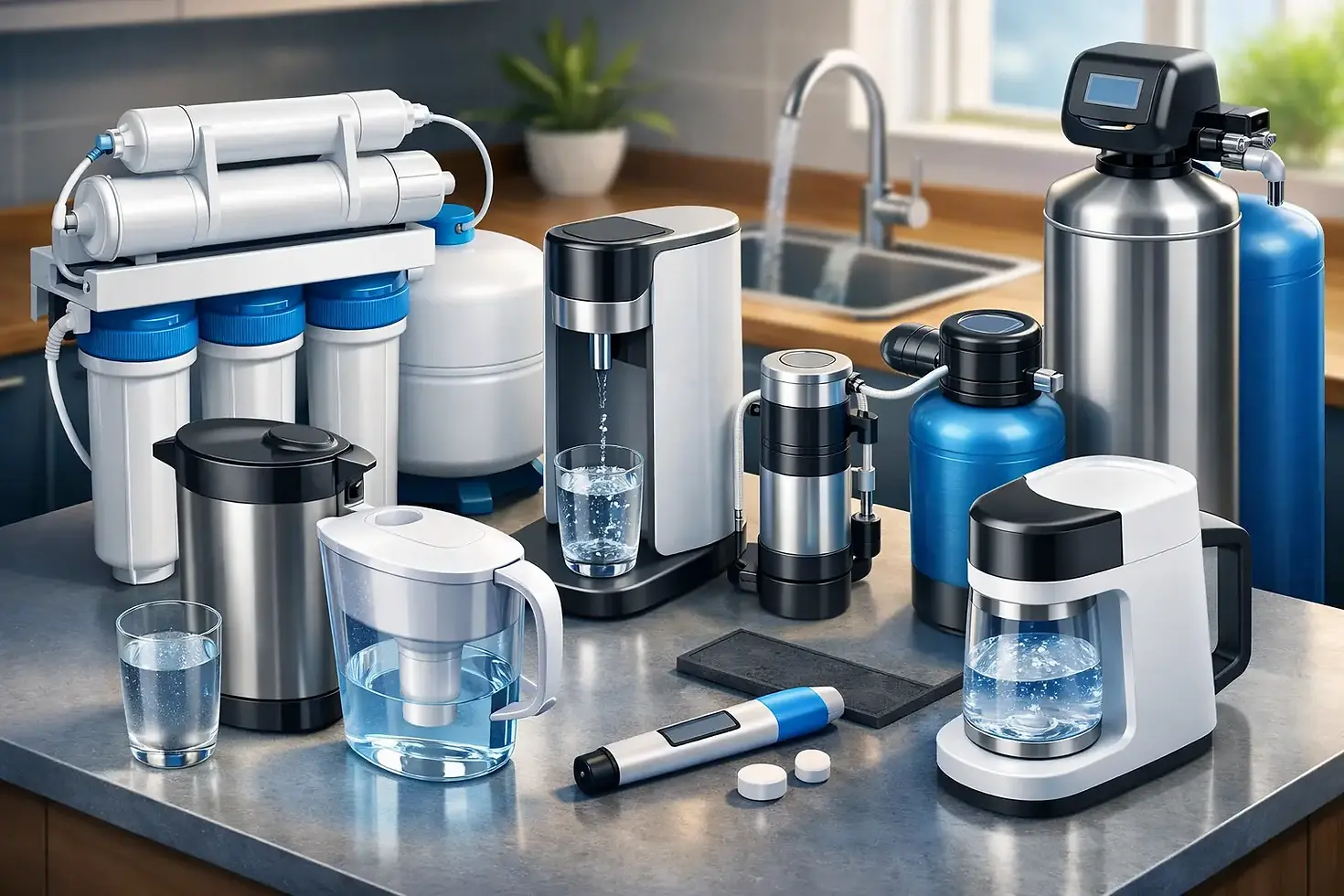
Best Home Water Purification Options

If you are still hauling bottled water home every week, the real question is not whether you need cleaner water. It is which of the best home water purification options actually makes life easier without adding another chore. For most households and small offices, that decision comes down to three things: what is in your water, how much water you use, and how much maintenance you are willing to deal with.
That is where people often get stuck. Many filtration products promise pure water, better taste, and lower costs, but they do not all solve the same problem. Some are fine for occasional use. Others are built for everyday drinking, cooking, baby formula, coffee machines, and office kitchens. The right choice depends less on marketing claims and more on how you live.
How to compare the best home water purification options
A good purifier should improve taste and smell, reduce unwanted contaminants, and fit your daily routine. If it costs less but wastes your time, leaks, or needs constant filter changes, it is not really the cheaper option.
Start with the basics. Ask whether you want filtered water only for drinking, or for cooking too. Think about volume. A single person in a small apartment can tolerate a slower system more easily than a family of five or a busy office. Then consider upkeep. Some systems are simple at first but become annoying when filters need frequent replacement or when performance drops and nobody notices.
Water quality concerns also vary. In some areas, people mainly want better taste and less chlorine. In others, they are more concerned about dissolved solids, heavy metals, sediment, or older plumbing. That is why the best home water purification options are not all interchangeable.
Pitcher filters and faucet filters
Pitcher filters are popular because they are cheap, easy to buy, and require no installation. For renters or people who want a quick improvement in taste, they can be a reasonable first step. They usually reduce chlorine and some common impurities, and they are simple to keep in the fridge.
The trade-off is capacity and consistency. A pitcher only filters a small amount at a time, which can become frustrating if your household drinks a lot of water or cooks often. Filters also need regular replacement, and if that slips, performance drops fast. For a family kitchen, a pitcher often feels like a temporary fix rather than a long-term answer.
Faucet-mounted filters solve part of the convenience problem because water comes straight from the tap. They are usually better for day-to-day use than pitchers, especially if you want filtered water on demand. But they still have limits. Flow rate can be slower, filter life can be shorter than people expect, and not every faucet is compatible.
These options work best when the goal is basic taste improvement and lower bottle use, not full-scale purification.
Under-sink carbon filtration systems
Under-sink carbon systems are a stronger step up for households that want cleaner-tasting water without seeing a device on the counter. They can handle sediment, chlorine, and some organic compounds more effectively than a basic pitcher. Because they are installed out of sight, they also feel more permanent and less cluttered.
For many homes, this is where convenience starts to improve. You get a dedicated source of filtered water and a higher volume than a countertop solution. That matters if you regularly fill bottles, cook pasta, wash produce, or make tea and coffee throughout the day.
Still, carbon systems are not the same as reverse osmosis. They can improve taste significantly, but they may not remove the same range of dissolved contaminants. If your concern is broader water purification rather than simple filtration, it may not be enough.
Reverse osmosis systems
If you want one of the strongest all-around answers for daily drinking water, reverse osmosis usually rises to the top of the list. It is especially attractive for families, offices, and small businesses that want consistent purification and better taste without relying on bottled water.
A reverse osmosis system pushes water through a semipermeable membrane that removes a wide range of unwanted particles and dissolved impurities. In practical terms, that means water that tastes cleaner and feels more dependable for drinking, cooking, baby food, and pets. Multi-stage systems often add sediment and carbon filters before and after the membrane, improving both protection and flavor.
This is where the gap between basic filtration and real purification becomes obvious. A pitcher may make water more pleasant. A quality reverse osmosis unit is designed to do much more.
The main hesitation is usually cost and maintenance. Buying a good system outright can feel expensive, and some people worry about installation or future filter changes. That concern is fair. A high-performance system only stays high-performance if it is maintained properly.
That is also why rental models have become more appealing. Instead of paying a large upfront amount and then managing service yourself, you get the benefit of purified water with predictable monthly costs and maintenance included. For households that want convenience more than a DIY project, that can be a smarter move than ownership.
Whole-house filtration systems
Whole-house systems treat water as it enters the property, so every tap and appliance receives filtered water. This can be useful if you are concerned about sediment, scale, or general water quality throughout the entire home, not just in the kitchen.
There is a real benefit here, especially for protecting pipes, water heaters, and shower fixtures. If hard water or sediment is affecting your plumbing, a whole-house setup can help solve a broader household problem.
But for pure drinking water, a whole-house system is not always the most efficient answer on its own. Many homes still pair whole-house filtration with a dedicated under-sink drinking water system, often reverse osmosis, because the needs are different. Showering and laundry do not require the same purification level as the water you drink every day.
Countertop purifiers and dispenser-style units
Countertop units appeal to people who want something more capable than a pitcher without modifying plumbing. Some are compact and practical, while others are bulky and better suited to office break rooms than home kitchens.
Their strength is flexibility. They are easier to move, often simpler to install, and can work well in short-term living arrangements. Their weakness is appearance and space. On a crowded kitchen counter, even a good machine can become irritating if it gets in the way.
For offices and small businesses, dispenser-style filtration can be a strong option when many people need access throughout the day. The right system reduces dependence on bottled water delivery and cuts down the constant cycle of ordering, storing, and replacing large plastic containers.
What usually gives the best value
If your goal is occasional filtered water at the lowest entry cost, a pitcher or faucet filter can work. If your goal is everyday convenience with moderate filtration, an under-sink carbon system is often a better fit. But if you want cleaner, better-tasting drinking water every day with stronger purification and less dependence on bottled water, reverse osmosis is hard to beat.
That is especially true when you calculate the hidden cost of bottled water. It is not just the purchase price. It is the time spent buying it, carrying it, storing it, and running out at the wrong moment. For families and offices, those small frustrations add up quickly.
A service-based reverse osmosis plan can make the value even clearer. Instead of dealing with equipment decisions, service schedules, and replacement filters yourself, you get an installed system and ongoing maintenance in one package. For a lot of people, that is the difference between intending to improve their water and actually doing it.
Choosing the right option for your home or office
The best system is the one you will actually use every day. That sounds obvious, but it matters. A cheap filter that is too slow, too small, or too annoying to maintain often gets ignored. A well-matched system becomes part of the routine without extra effort.
For a small household with modest needs, simple filtration may be enough. For growing families, people preparing baby formula, or offices that want a steady supply of better water, it usually makes sense to look beyond entry-level products. Better purification, higher volume, and built-in service create real day-to-day value.
If you are comparing the best home water purification options in Cyprus, this becomes even more practical. People want safe, great-tasting water without the hassle of bottled water runs, plastic waste, or large upfront purchases. That is why many are moving toward managed reverse osmosis solutions that combine performance with convenience.
Pure water should not feel complicated. The right setup saves money, cuts effort, and gives you one less thing to think about every day.


Comments