.png)
Guide to Water Filters in Cyprus for Homes & Offices

Buying cases of bottled water, lifting them into the car, and finding somewhere to store them is a costly routine that quickly gets old. This practical guide to water filters Cyprus households and office managers can use explains what to look for, why reverse osmosis is often the preferred choice, and how to avoid paying for a system that is difficult to maintain.
The right filter should do more than improve the taste of a glass of water. It should fit your water use, kitchen space, budget, and willingness to manage replacement filters over time. For families, offices, and small businesses, the best solution is usually the one that delivers consistent drinking water without adding another job to the weekly schedule.
Guide to Water Filters in Cyprus: Start With Your Water
Tap water can vary by area, building plumbing, water storage tanks, and seasonal supply conditions. Municipal water is treated, but treatment does not automatically mean every household enjoys water that tastes fresh or feels right for daily drinking. Chlorine taste, sediment, scale, and dissolved solids are common reasons people turn to bottled water or filtration.
Before choosing a system, be clear about what bothers you most. If the water has an unpleasant taste or odor, a basic carbon filter may help. If you are concerned about a broader range of dissolved impurities, mineral salts, and contaminants, reverse osmosis offers much more thorough filtration. If you see particles in a glass, sediment filtration should be part of the setup.
A water test can be useful when there is a specific concern, especially in an older building or a property using a storage tank. However, you do not need to become a water-quality expert to make a sensible choice. A professionally specified reverse osmosis system is designed to address the everyday concerns that lead most households to buy bottled water in the first place.
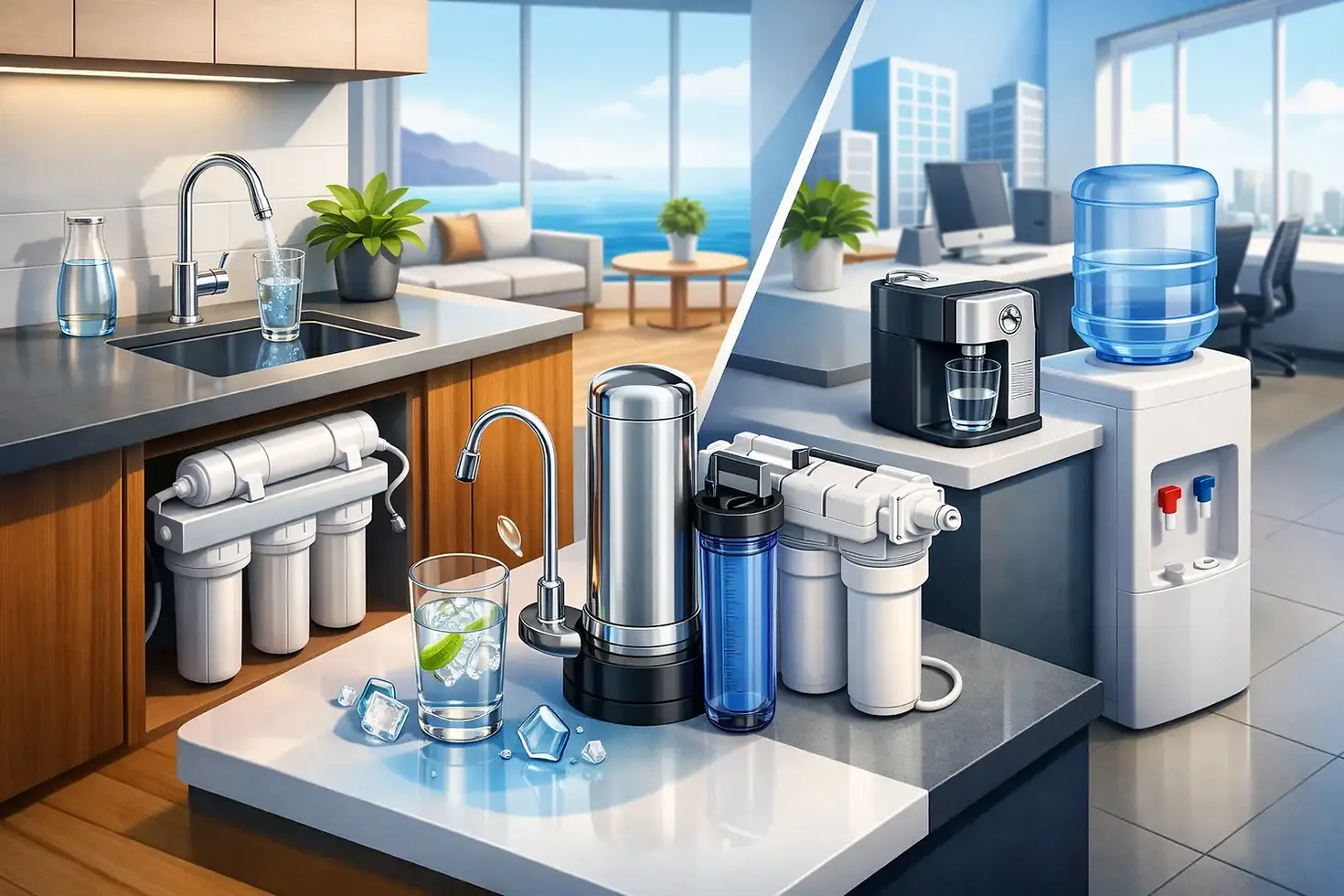
Know the Main Types of Water Filters
Not every filter does the same job. Comparing systems by price alone can lead to disappointment, because a lower-cost jug or faucet filter is not equivalent to a multi-stage under-sink unit.
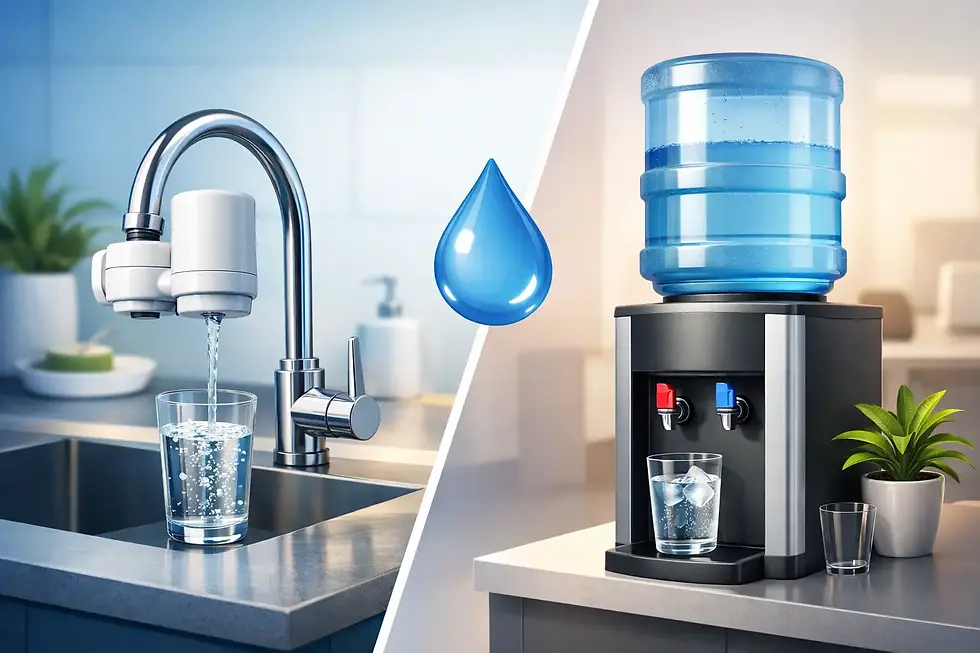
Pitcher and faucet filters
Pitchers and faucet-mounted filters are easy to buy and require no installation. They can reduce chlorine taste and make water more pleasant to drink, but they have limited capacity and require frequent cartridge changes. They are practical for short-term use, rented accommodation where installation is not possible, or a very small household.
Their trade-off is convenience versus performance. You must keep refilling them, remember when the cartridge is due, and accept that they generally do not provide the same level of filtration as reverse osmosis.
Countertop filters
Countertop units sit beside the sink or connect to a faucet. They can offer better filtration than a pitcher without permanent plumbing work. This can suit tenants, but it takes up counter space and may not be ideal for a busy kitchen or office break room.
Under-sink reverse osmosis systems
Reverse osmosis, often called RO, is the strongest all-around option for drinking and cooking water. It uses pressure to pass water through a very fine membrane, reducing many dissolved substances that simpler filters may leave behind. Most systems also include stages for sediment and carbon filtration, helping protect the membrane and improve taste.
A 6-stage or 7-stage system adds layers of treatment rather than relying on one cartridge. The precise stages can vary by model, so ask what each stage does, how often it is replaced, and whether replacement service is included. More stages are not automatically better if they do not match a clear purpose, but a properly designed multi-stage RO unit provides a dependable solution for daily use.
Choose the Right Reverse Osmosis System for Your Needs
Start with consumption. A couple who mainly drink water at home may have different needs from a family preparing baby food, filling sports bottles, making coffee, and cooking every day. An office with ten employees needs a system that can keep up at peak times without creating a queue at the kitchen sink.
Then consider installation. An under-sink system needs space for filters, a storage tank where applicable, and access to the cold-water line and drain. A good provider should explain what is needed before installation, rather than leaving you to discover surprises on the day. In most homes, the equipment stays neatly out of sight and a dedicated faucet provides filtered water at the sink.
Maintenance is the next decision, and it matters more than many buyers expect. Filters do not last forever. Sediment and carbon stages need regular replacement, while RO membranes have their own service life. Ignoring this schedule can affect water flow, taste, and filtration performance.
For that reason, a rental plan can make more sense than purchasing equipment outright. Instead of paying a large upfront amount and tracking filter changes yourself, you receive the system, installation-ready service, and planned maintenance for a predictable recurring payment. RRWater offers reverse osmosis rental plans with free filter replacement every six months, helping customers keep their system working as intended without chasing parts or booking separate service calls.
Compare Cost Against Bottled Water, Not Just the Filter Price
The price of a water filter is only one part of the decision. Bottled water can look inexpensive per bottle, yet regular purchases add up quickly for a household or workplace. Add fuel, delivery charges, storage space, and the inconvenience of carrying heavy packs, and the real cost is often much higher than expected.
A filtration rental plan turns that variable spending into a clear monthly, quarterly, half-year, or annual cost. That predictability is valuable for family budgets and especially useful for office managers who want to control recurring supplies. It also means fewer emergency trips to the store when the water supply runs out before a weekend or a busy workday.
There is also the plastic question. Bottled water creates a steady stream of bottles to store, recycle, or throw away. Filtered tap water lets you refill reusable bottles at home, at work, or before leaving for the beach, school, or gym. It is a simpler routine with less plastic waste.
What to Ask Before You Rent or Buy
A provider should be able to answer direct questions in plain language. Ask whether installation is included, which filters are changed and when, what happens if the unit needs service, and whether there is a trial period. Confirm the payment schedule and whether there are any charges for maintenance visits or replacement filters.
It is also sensible to ask about system certification, manufacturing standards, and the parts used in the unit. Quality components and proper servicing matter more than impressive technical labels. The goal is not to buy the most complicated machine. It is to have clean, great-tasting water available whenever you turn on the dedicated faucet.
For an office or business, ask about capacity and support response time. A small unit may be perfect for a family but frustrating in a workplace where many people fill bottles at the same time. Match the system to real demand, not the smallest advertised price.
Make Filtered Water Part of Everyday Life
Once a reverse osmosis system is installed, use it beyond drinking glasses. Filtered water can improve the taste of tea, coffee, soups, and ice. Families often prefer it for cooking, washing fruits and vegetables, preparing baby food, and keeping pet water bowls fresh. The practical benefit is simple: better water is available at the point of use, without planning ahead.
Choose a system with service that fits your life, keep replacement filters on schedule, and stop treating clean drinking water as another item on the shopping list. A reliable water filter should quietly make every day easier, one refill at a time.


Comments