.png)
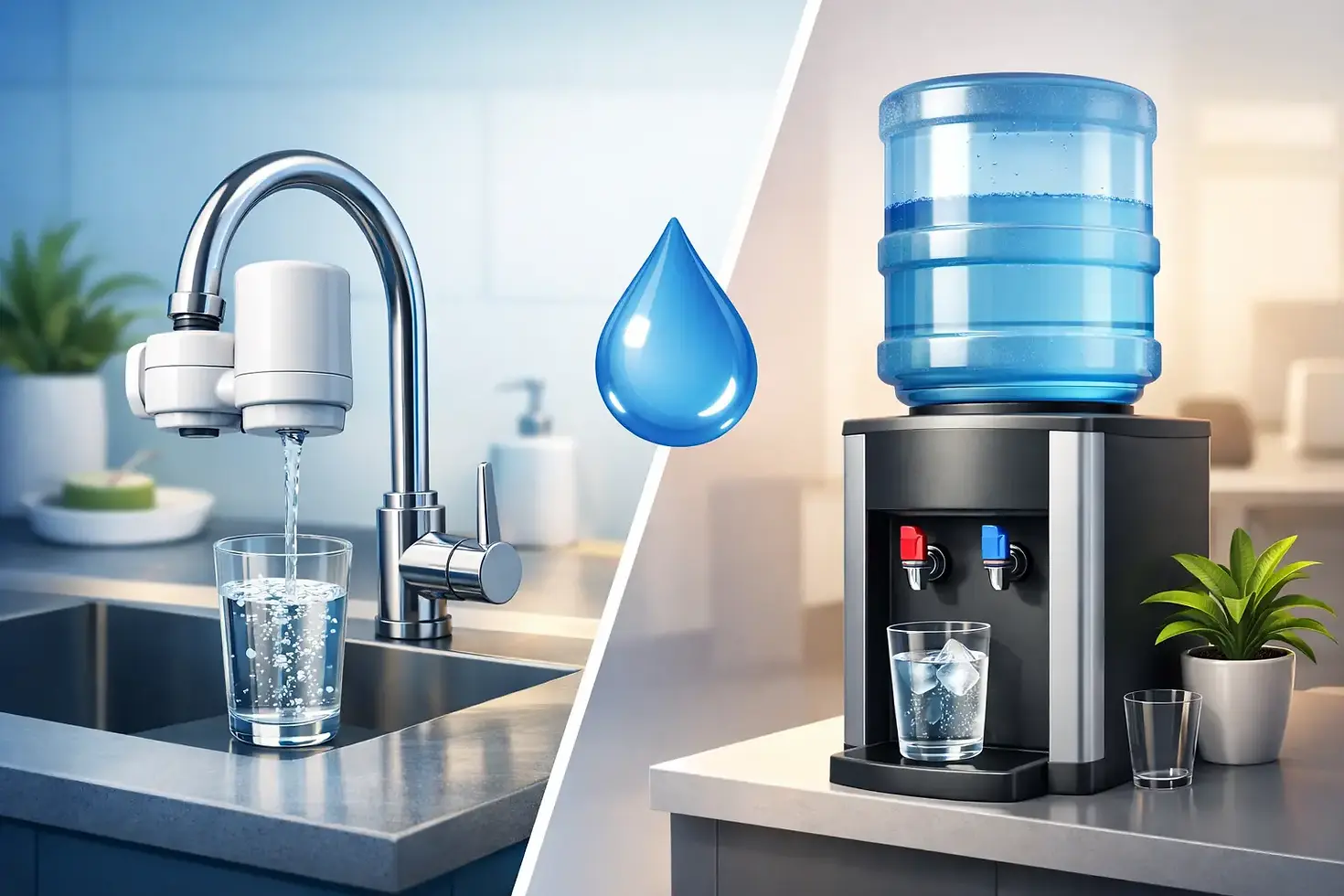
Tap Water Filter vs Water Cooler: Which Is Better?

A tap water filter vs water cooler decision usually comes down to one frustrating daily question: do you want to keep buying, lifting, storing, and replacing large water bottles, or make better-tasting water directly from your tap? For homes and busy workplaces, the answer affects more than taste. It affects your monthly spending, available space, plastic waste, and how reliably everyone can get a cold or room-temperature glass of water.
Water coolers have long been a familiar solution, especially in offices. But a modern filtration system, particularly reverse osmosis, gives many households and small businesses a more practical route to pure drinking water without the bottle delivery routine. The better choice depends on your water use, space, and service expectations.
Tap Water Filter vs Water Cooler: The Real Differences
A traditional bottled water cooler dispenses water from a large bottle, commonly delivered by a supplier or purchased from a store. It is simple to understand: place the bottle on the dispenser, pour a glass, and replace it when empty. Some models also heat or chill the water, which can be useful in a shared office.
A tap water filter connects to your existing water supply and treats water as you need it. Basic jug and faucet filters can improve taste, but reverse osmosis systems go further. They use multiple filtration stages to reduce a wide range of dissolved substances, sediments, and unwanted tastes or odors before the water reaches your glass.
The main difference is the supply model. A cooler relies on water arriving in bottles. A filtration system creates drinking water at home or at work from the tap. That distinction changes the cost, effort, and environmental impact over time.
Cost: Recurring Bottles Add Up Quietly
The upfront price of a water cooler can look attractive, especially when a dispenser is rented or provided with an initial bottle order. The ongoing expense is where many families and offices feel the pressure. Every bottle has to be purchased, delivered, collected, or carried home. The more people drink, the faster that cost rises.
There are also small expenses that are easy to overlook: delivery charges, deposits, emergency shop runs when supplies run out, and the space needed to keep spare bottles. For a family that drinks plenty of water, cooks with it, makes baby formula, or fills pet bowls, bottled water can become a regular household bill rather than an occasional purchase.
A water filtration rental spreads the cost into a predictable service payment. Instead of buying water repeatedly, you pay for the system, installation, and scheduled maintenance under one plan. That makes budgeting easier, particularly for offices where water use varies from month to month.
A filter is not automatically the cheapest option for every person. Someone who drinks very little water at home may not see the same savings as a large family or a 10-person office. But for regular daily use, replacing bottled water purchases with filtered tap water often provides much stronger long-term value.
Convenience: No More Lifting and Storing Bottles
A full water cooler bottle is awkward to carry, difficult to lift, and never seems to run out at a convenient moment. In an apartment, storing several bottles can take up valuable floor space. In an office, someone has to notice the supply is low, place an order, receive delivery, and fit a new bottle onto the cooler.
A connected filtration system removes that cycle. Water is available when you need it for drinking, cooking, coffee, tea, ice cubes, and everyday food preparation. There is no waiting for a delivery and no last-minute trip to buy bottles.
This matters especially in Cyprus, where warm weather can increase water consumption for much of the year. A dependable supply at the kitchen sink helps make drinking more water the easy choice. For offices, it means staff and visitors can refill bottles throughout the day without monitoring a stack of containers.
Water coolers do have one convenience advantage: many dispense chilled water immediately, and some provide hot water for tea. If that is essential, choose a filtration setup with a compatible dispenser or keep a water pitcher in the refrigerator. The right solution should fit how people actually drink water, not create another daily workaround.
Water Quality and Taste: Look Beyond the Bottle
Bottled water is often perceived as automatically better, but the label alone does not tell you how fresh it is, how it was stored, or whether it suits your taste preferences. Large bottles can sit in storage areas, delivery vehicles, or warm rooms before they are used. A cooler also needs regular cleaning because its dispensing area is handled by many people.
Filtered tap water gives you more direct control. A properly maintained reverse osmosis system treats water at the point of use, immediately before you drink it. Multi-stage systems are designed to improve taste and reduce common water concerns, while the final result is available without opening another plastic bottle.
The system only performs as intended when maintenance is taken seriously. Filters need replacement at the correct intervals, and the unit should be serviced according to the supplier's schedule. This is where a rental plan can be more reassuring than purchasing a system and trying to remember every maintenance task yourself.
With RRWater, 6-stage and 7-stage reverse osmosis units are available through rental plans that include installation-ready service and free filter replacement every six months. That helps households and businesses enjoy the benefits of filtration without turning maintenance into another job on the to-do list.
Plastic Waste and Space: The Everyday Impact
Large refill bottles are reusable, which is better than buying many small single-use bottles. Still, a bottled cooler depends on plastic containers, transportation, collection, cleaning, and storage. For organizations trying to reduce waste, that model can feel out of step with their goals.
A tap water filter does not eliminate every replaceable component - filter cartridges must eventually be changed - but it can greatly reduce the number of plastic water bottles moving through your home or workplace. Employees can use personal reusable bottles, and families can fill jugs for the table or refrigerator as needed.
The space difference is equally practical. A water cooler needs room for the dispenser and usually several spare bottles. An under-sink reverse osmosis unit keeps most of the equipment out of sight, leaving the kitchen or office break area less cluttered.
Maintenance: Who Is Responsible When Something Needs Attention?
A water cooler may seem maintenance-free because the supplier delivers the water. Yet the cooler still requires cleaning and sanitizing, and bottle changes are a physical task. In a shared workplace, this responsibility often falls to an office manager or whichever employee happens to be nearby.
A filtration system has a different maintenance requirement: scheduled filter changes and occasional service checks. The important question is not whether maintenance exists. It is whether it is included, planned, and handled by a reliable provider.
Before choosing either option, ask these practical questions:
Is installation included, and who handles future service?
How often are filters or dispenser components cleaned and replaced?
What happens if water flow changes or the unit needs support?
Are the monthly costs clear, including delivery, maintenance, and replacement parts?
A service-inclusive rental can make a filtration system feel as simple as a cooler, while offering far more control over water availability. It is particularly useful for people who want quality water without a large upfront purchase or technical responsibility.
Which Option Fits Your Home or Office?
Choose a bottled water cooler if you need a standalone dispenser, have no practical connection point for a filter, or use only a small amount of drinking water. It can also suit temporary spaces where installation is not possible.
Choose a tap water filtration system if you want water for more than filling glasses. It is the stronger option for families making meals, preparing drinks, filling bottles before school, and supporting daily hydration. It also makes sense for offices that want to reduce repetitive ordering, bottle storage, and plastic handling.
For most high-use households and small businesses, reverse osmosis filtration offers the better balance of purity, cost control, and convenience. The key is choosing a system with clear service terms and routine filter replacement included.
The best drinking water solution is the one people will use every day without thinking about deliveries, empty bottles, or whether there is enough left for tomorrow. When clean, great-tasting water comes straight from the tap and maintenance is already arranged, staying hydrated becomes one less thing to manage.


Comments