.png)
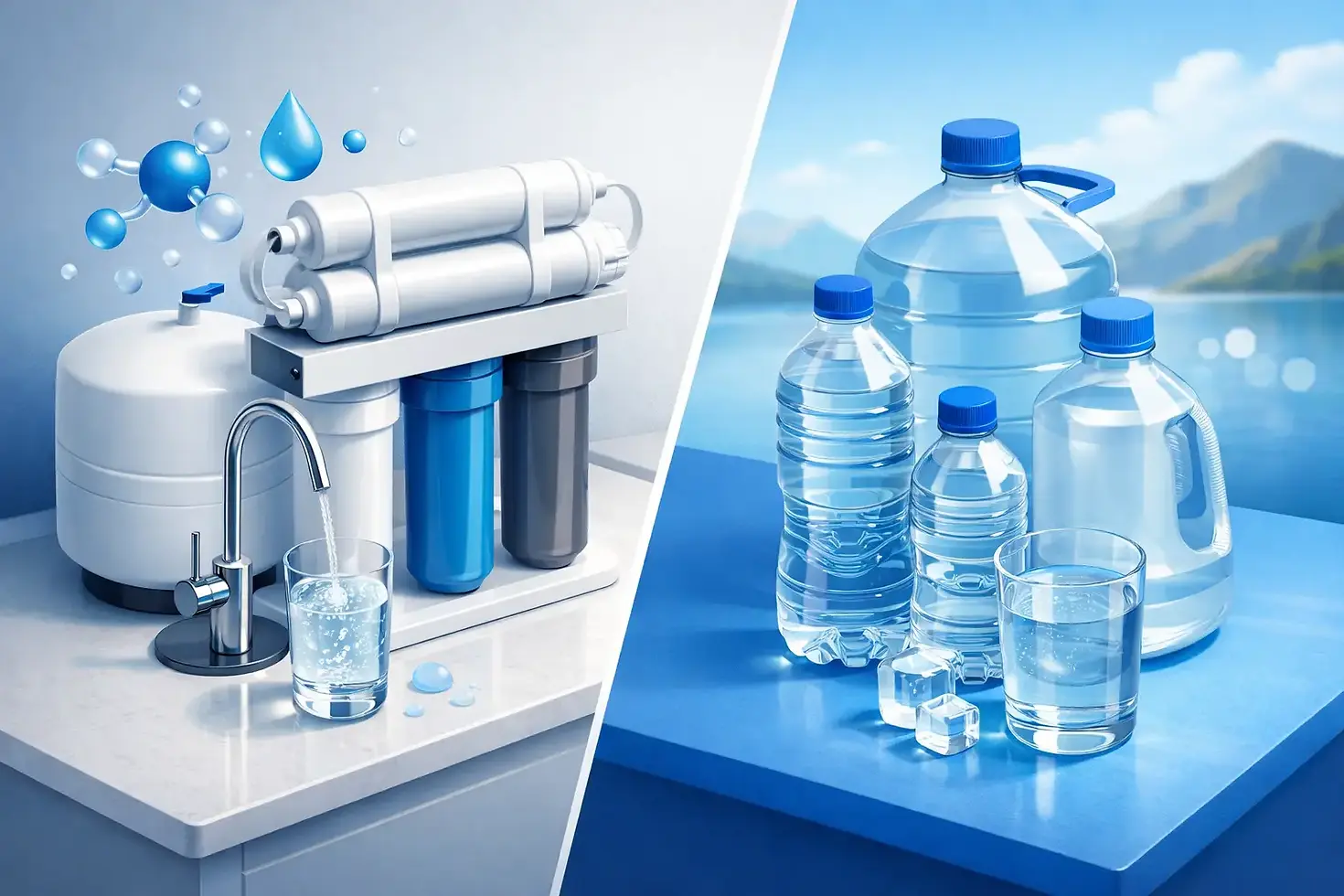
Reverse Osmosis vs Bottled Water

If you are still hauling packs of water from the supermarket or waiting on bottle deliveries, the real question is not just taste. It is whether bottled water still makes sense once you compare it honestly with a reverse osmosis system at home or in the office. In the reverse osmosis vs bottled water debate, most people are really deciding between a routine that costs more and creates hassle, or a setup that gives them clean drinking water on demand.
For families, office managers, and small businesses, that choice affects daily life more than it might seem. Drinking water is not an occasional purchase. It is a constant need for coffee, cooking, baby formula, pets, guests, and the simple habit of filling a glass whenever you want. That is why this comparison matters.
Reverse osmosis vs bottled water: what changes day to day?
Bottled water feels simple at first because there is nothing to install and nothing to learn. You buy it, store it, open it, and drink it. But that simplicity starts to fade once you factor in repeat trips to the store, delivery schedules, empty bottle buildup, and the steady expense that never really stops.
Reverse osmosis works differently. Instead of buying water again and again, you produce filtered drinking water where you already live or work. A quality multi-stage system filters water through several stages designed to reduce impurities, improve taste, and deliver a more consistent result at the tap.
The biggest day-to-day difference is availability. Bottled water is only convenient until you run out. Reverse osmosis gives you water when you need it, without planning around stock levels in your pantry or office kitchen.
Cost is usually the turning point
For many households and businesses, price is what settles the reverse osmosis vs bottled water question.
Bottled water rarely feels expensive in one purchase. A few euros here, another pack there, maybe a larger refill order for the office. The problem is that small purchases add up fast because the cycle never ends. If you have children, employees, or frequent visitors, consumption rises quickly.
A reverse osmosis system changes that pattern. Instead of paying over and over for packaged water, you pay for access to filtration. That makes costs more predictable. It also removes the premium built into bottling, packaging, transport, and retail markup.
This is one reason rental plans have become attractive. They lower the barrier to getting started because there is no large upfront purchase to think about. When installation and filter replacement are included, the financial side becomes easier to manage and easier to trust. You know what you are paying for, and you know the system is being maintained.
For a busy home or workplace, that often works out better than continuing to spend on cases, jugs, or dispenser refills month after month.
Taste depends on the water source, but consistency matters
People often assume bottled water automatically tastes better. Sometimes it does. Sometimes it does not. Taste depends on the source, mineral content, storage conditions, and how long the bottle has been sitting in a warehouse, truck, or shop shelf.
Reverse osmosis water is different because the goal is consistency. A properly maintained system is designed to reduce unwanted elements that affect odor and flavor. That matters if you use water not just for drinking, but also for tea, coffee, soups, pasta, and baby food.
Some people prefer the familiar taste of a specific bottled brand. That is fair. Taste is personal. But many households find that once they switch to reverse osmosis, the cleaner, lighter flavor is exactly what they wanted all along. The bigger advantage is that it is always there, straight from the tap, rather than tied to whatever brand was available that week.
Safety is not a slogan. It is about control.
Both bottled water and reverse osmosis can provide safe drinking water, but they offer different kinds of reassurance.
With bottled water, you are trusting the bottler, the transport chain, the storage environment, and the time the product spent in plastic before you drank it. In many cases that trust is justified, but it is still a chain with several steps outside your control.
With reverse osmosis, the reassurance comes from having treatment happen at the point of use. The water is filtered where you drink it. You are not depending on stored inventory or wondering how long bottles sat in heat before reaching you.
Of course, maintenance matters. A system is only as good as the condition it is kept in. That is why service support is important, especially for people who want clean water without having to remember filter schedules or manage technical details. A rental service with regular filter replacement removes that problem and keeps the system performing the way it should.
Reverse osmosis vs bottled water for convenience
This category is less close than many people think.
Bottled water seems convenient because it is familiar. But familiar is not the same as easy. Cases are heavy. Large bottles are awkward. Storage takes space. Someone has to notice when supply is low. Someone has to reorder, shop, carry, stack, and dispose of the empties.
That may be manageable for one person living alone. It is much less appealing for a family or a busy office. In workplaces, it also creates small but constant friction. Staff ask where the extra bottles are, someone forgets to order more, and the kitchen runs dry at the wrong moment.
Reverse osmosis removes most of that friction. Water is available at the point of use, and the system works in the background. When installation and maintenance are handled for you, the entire experience becomes simpler than bottled water, not more complicated.
That is the real convenience standard. Not what feels easiest on day one, but what makes life easier every week after that.
Plastic waste is no longer a minor issue
For many buyers, plastic used to be a secondary concern. Now it is part of the main decision.
Bottled water creates a steady stream of waste, even when bottles are recycled. There is still manufacturing, transport, storage, and disposal involved. If your household or office goes through a lot of water, the amount of plastic adds up fast.
Reverse osmosis dramatically reduces that dependence on single-use plastic. That does not just help the environment in a broad sense. It also makes your home or office cleaner and less cluttered. Fewer bottles to store, fewer empties to manage, fewer trips to deal with something as basic as drinking water.
In a place where many people are already looking for practical ways to cut waste without sacrificing comfort, this is one of the easiest changes to make.
When bottled water still makes sense
A fair comparison needs some honesty. Bottled water is not always the wrong choice.
If you are traveling, setting up a temporary space, or only need water for a very short period, bottled water can be the practical answer. It can also work for people who rent short term and do not want any installation at all, even a simple one.
Some people also prefer bottled water for specific occasions, such as events or emergencies. That does not mean it is the best everyday solution. It just means there are situations where portability matters more than long-term value.
For regular daily use, though, bottled water starts losing ground quickly. Once water is part of your routine at home or work, convenience, cost control, and supply reliability become more important than the ability to grab a bottle off a shelf.
Why many households and offices are switching
The move toward reverse osmosis is not about chasing a trend. It is about removing recurring annoyances while improving water quality and controlling cost.
That is especially relevant for people who already know the problem they are trying to solve. They are tired of lifting bottles. They are tired of spending money on water that disappears fast. They want something cleaner, easier, and better suited to daily life.
A rental model makes that switch even more practical. It turns filtration into a service rather than a project. You do not need to research every component, pay a large purchase price, or worry about maintenance getting ignored. For many customers, that is the difference between thinking about better water and actually making the change. RRWater speaks directly to that need by pairing reverse osmosis systems with installation-ready service, recurring plans, and filter changes included.
The best water setup is the one you will actually use every day without hassle. If your current routine involves carrying, storing, and reordering bottled water, you already know where the friction is. Pure water should feel simple, not like another task on your list.
That is why, for most homes and workplaces, the smarter option is the one that stays ready in the background and lets you get on with your day.


Comments